Structural Solutions Built for High-Stress Steel Mill Applications
Steel mills operate in some of the most demanding industrial environments in the world. Structural systems inside these facilities are exposed to relentless heat, vibration, and massive loads every day. Unlike conventional industrial settings, there is little margin for error. Structural steel components must perform exactly as specified, often under conditions that push materials and welds to their limits.
In these environments, performance and reliability are not theoretical goals. They are direct outcomes of how components are fabricated, welded, inspected, and delivered to the site. Steel mill fabrication requires disciplined execution, a deep understanding of operational demands, and a commitment to meeting customer-defined specifications without compromise.
Structural solutions built for steel mills succeed or fail based on how well they hold up under stress. That reality places enormous importance on fabrication quality, welding precision, and project coordination from start to finish.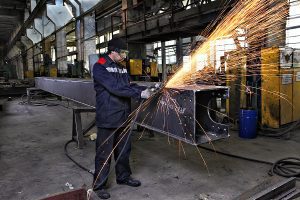
Why Steel Mill Environments Challenge Conventional Fabrication
Steel mills present a unique combination of forces that few other industrial facilities experience at the same scale. Structures must support heavy static loads from equipment while also absorbing dynamic forces created by rolling operations, cranes, and material handling systems. At the same time, thermal cycling introduces expansion and contraction, placing additional strain on connections and welds.
Constant vibration is another factor. Even minor inconsistencies in weld execution can grow into serious issues when subjected to continuous movement. Over time, stress concentrates at weak points, leading to cracking, deformation, or failure.
High temperatures further complicate fabrication requirements. Steel mill components may be located near furnaces, ladles, or hot material transfer areas where radiant heat is unavoidable. Structural steel in these zones have to be fabricated to perform within the temperature ranges dictated by mill operations.
A single compromised weld or misaligned component can trigger safety concerns, disrupt production, or force an unplanned shutdown. That level of risk demands a higher standard of execution.
The Real Consequences of Fabrication Mistakes
Structural issues in steel mills rarely remain isolated. A weld defect does not simply affect one joint. It can compromise an entire system that depends on proper load transfer and alignment. Over time, these weaknesses propagate, creating conditions that threaten both equipment and personnel.
Safety risks rise sharply when welding precision or inspection discipline is lacking. Undetected flaws may remain hidden until components are under full operational load. At that point, corrective action becomes far more complex and dangerous.
Downtime is another major concern. Steel mill shutdowns are carefully scheduled to minimize production losses. Fabrication errors that delay installation or require rework can extend outages and drive up costs. Every additional hour offline affects output, delivery commitments, and revenue.
In this context, fabrication quality is not just a technical issue. It is a business risk factor that impacts safety, productivity, and long-term asset performance.
Executing Fabrication That Meets Steel Mill Demands
Successful structural steel work in steel mills starts with understanding the application-specific demands defined by the customer. Load requirements, operating temperatures, installation constraints, and maintenance considerations all shape how components are fabricated and welded.
Compliance with industry and site-specific safety requirements is non-negotiable. Inspections performed per specifications provide confidence that fabricated structural steel components are ready for service in high-stress environments.
Project management ties all of these elements together. Steel mill fabrication projects often coincide with tight outage windows. Coordinated scheduling aligns fabrication, delivery, and installation activities with mill shutdown plans. Clear communication keeps all stakeholders informed and reduces the risk of delays.
All of these factors contribute to a single outcome: Structural solutions that perform as required because they were executed precisely to customer-defined needs.
Here is what consistently separates reliable steel mill fabrication from average work:
- Welders certified for high-load applications
- Fabrication executed to tight tolerances
- Processes selected to match operational stress
- Inspections performed per specifications
- Documented quality control at every stage
- Project coordination aligned with shutdown schedules
Why Experience Matters in Steel Mill Fabrication
Steel mills demand fabrication partners who understand the realities of operating environments, not just fabrication techniques. Experience working inside mills builds awareness of access limitations, safety protocols, and the urgency of outage schedules.
A trusted fabrication partner does more than deliver components. They support the success of the entire project by anticipating challenges and executing work that fits seamlessly into the customer’s operational plan.
Structural steel fabricated for steel mills must work the first time. There are no second chances once production resumes.
Supporting Long-Term Reliability
Fabrication quality supports safety by reducing the likelihood of unexpected failures. It supports efficiency by minimizing installation issues and downtime. It supports longevity by producing components that withstand years of stress without degradation.
Steel mills rely on structural systems that quietly do their job day after day. When fabrication is executed correctly, these systems fade into the background, allowing operations to focus on production.
A Fabrication Partner You Can Count On
Swanton Welding Company brings extensive experience in structural steel and steel mill fabrication, supporting complex projects where precision and schedule adherence matter most. With certified welders, disciplined quality control, and proven project coordination, Swanton Welding executes fabricated solutions that will meet your strict operational requirements.
If your facility is planning structural upgrades, repairs, or replacements in a high-stress environment, working with an experienced partner can make the difference between smooth execution and costly setbacks. Contact us today to discuss how our fabrication capabilities can support your next steel mill project with accuracy, reliability, and confidence.

