Why Fabricated Furnace Solutions Outperform Standard Options
Industrial furnaces operate in some of the most demanding conditions in manufacturing, and their performance depends heavily on the quality of the fabricated components behind the design. These custom components can positively affect furnace reliability, safety, and long term performance in high temperature industrial environments.
This post discusses the limitations of standard fabricated furnace components, the operational and safety challenges they can introduce over time, and how custom fabricated parts built to specification can reduce downtime, improve durability, and support long term industrial furnace performance.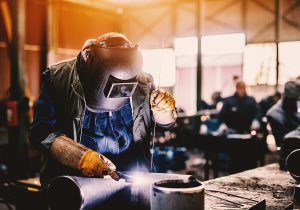
It is written for industrial furnace manufacturers, engineers, and operations teams who are responsible for building or maintaining furnaces that must perform consistently under continuous thermal stress.
The insights shared come from Swanton Welding, a company that specializes in precision welding and fabrication for industrial equipment, including components used in industrial furnace systems. With experience fabricating parts to customer provided specifications, Swanton Welding understands how material selection, weld quality, and structural integrity influence how furnace components hold up in demanding applications.
Furnace Components Built for Reliability and Performance
Industrial furnaces operate in extreme heat, continuous cycles, and tight production schedules. This places constant stress on every structural and mechanical part. When those components fail to perform as expected, the entire furnace suffers.
Many manufacturers rely on standard, off the shelf fabricated parts to meet production timelines and control upfront costs. At first, this approach seems practical. Standardized components are easy to source and familiar to work with.
The problem is that industrial furnaces rarely operate under ideal conditions. Over time, standard fabricated parts are pushed beyond what they were designed to handle. When fabrication quality, material selection, or weld integrity falls short, performance issues can surface.
The Problem With Standard Fabricated Furnace Components
Standard furnace components are designed to serve a wide range of applications. This generalized approach can create weaknesses when parts are exposed to real world operating conditions.
Thermal stress is one of the first challenges. Thin materials, inconsistent weld quality, or insufficient reinforcement can lead to warping, cracking, and fatigue as components expand and contract under repeated heat cycles. These issues may develop gradually, but they compound over time and can reduce overall furnace reliability.
Structural integrity is another concern. Furnace frames, panels, ducts, and housings fabricated without application specific requirements in mind may lack the rigidity needed for continuous operation. As stresses increase, joints may weaken and alignment issues emerge.
When these components begin to fail, maintenance needs increase. Repairs become more frequent and downtime becomes harder to avoid. Furnace manufacturers are left managing problems that could have been prevented with application-specific components.
The Agitation of Downtime and Reworks
As fabricated components degrade, unplanned downtime becomes a reality. Production schedules are disrupted. Labor is redirected toward repairs instead of output. Replacement parts are rushed instead of strategically sourced.
For furnace manufacturers, this creates a ripple effect. Delivery timelines slip. Customer confidence is impacted. Engineering teams are forced to redesign around fabrication limitations rather than focusing on innovation and performance improvements.
The resulting costs escalate quickly. Emergency repairs, rework, and expedited fabrication eat away at margins. Standard components can be a cost saving decision up front, but can become a long term liability.
Custom Fabricated Furnace Components Solve These Issues
Custom fabricated furnace components address these challenges by aligning fabrication quality with real operating demands. Instead of forcing a standard part into a specialized application, components are built to meet defined specifications provided by manufacturers.
Material selection plays a critical role. Thicker plate steel, properly rated alloys, and reinforced structural components improve durability under sustained thermal stress. Materials chosen to match the application help keep performance and reliability steady under demanding conditions.
Weld quality is equally important. Precision welding techniques and tight fabrication tolerances reduce stress concentrations and improve structural integrity. This results in components that hold their shape, maintain alignment, and withstand repeated heat cycles without premature failure.
Custom fabrication also allows furnace manufacturers to control dimensions, configurations, and interfaces. Components are built to integrate seamlessly into the overall furnace design, supporting efficient assembly, reliable operation, and long term stability.
Reduced Maintenance and Improved Reliability
When furnace components are fabricated to match duty cycle demands, wear is reduced and maintenance becomes more predictable. Instead of reacting to failures, maintenance teams can operate on planned schedules.
This reliability benefits everyone involved. Furnace manufacturers gain confidence in their designs. End users experience fewer disruptions. Operating costs stabilize over time.
Why Furnace Manufacturers Partner With Swanton Welding
Custom fabricated components contribute directly to safer industrial furnace operation. This supports your manufacturing efforts and reinforces the well-earned trust between you and your customers.
By working from manufacturer provided specifications, we can deliver precision components that focus on structural integrity and quality materials. The result is equipment that performs reliably under demanding conditions, helping your customers avoid unexpected downtime and costly repairs.
Investing in Fabrication for Long Term Performance
Furnace performance depends on more than design alone.
While standard parts may offer short term convenience, they can introduce long term challenges. Custom fabricated furnace components provide a better path forward by addressing real operating conditions and supporting consistent performance.
For furnace manufacturers focused on reliability, safety, and long term success, investing in high quality fabrication is an investment in the future of every system you build. Contact Swanton Welding to learn more about our industrial furnace component fabrication capabilities.

