Why Fabrication Shops Partner with Specialists for Rolling, Forming, and Complex Multi-Bend Work
Fabrication shops may receive projects requiring specialized rolling, forming, or complex multi-bend work that their existing equipment and workforce cannot handle efficiently. This is written for fabrication businesses looking to expand their capabilities without investing in additional machinery, training, or personnel. It explains how partnering with a specialized fabricator can help manage production demands, reduce rework, maintain consistent results, and take on projects that fall outside a shop’s current capabilities. The focus is on using specialized fabrication partnerships to improve production flexibility while keeping projects on schedule.
Fabrication shops do not have to perform every process in-house to remain competitive. In fact, taking on every type of fabrication work can require significant investments in equipment, personnel, training, and facility space. For shops that occasionally receive projects involving specialized rolling, forming, or complex multi-bend work, investing in those capabilities may not make financial sense.
Partnering with an experienced fabrication specialist can provide another option. 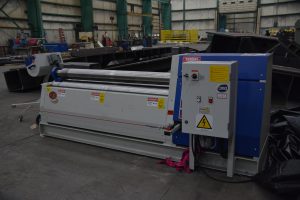
Specialized Equipment Can Be Expensive to Maintain
Rolling, forming, and complex bending can require equipment that is not part of every fabrication shop’s operation. Purchasing specialized machinery represents a significant investment, particularly if the equipment will only be used periodically.
The initial purchase is only part of that investment. Specialized equipment also requires appropriate facility space, maintenance, setup, and operators who understand how to use it effectively. Depending on the process, developing that expertise may require additional hiring or training.
For a shop that has consistent demand for specialized work, bringing the capability in-house may be worthwhile. But when that work comes in intermittently, partnering with a specialist can provide access to the capability without requiring the shop to absorb the full cost of ownership.
This gives fabrication shops more flexibility in how they manage their production resources.
Expand Capabilities Without Expanding Your Equipment List
A fabrication shop may have customers who occasionally request components requiring rolling, forming, or multiple bends that fall outside its normal production capabilities. Turning down that work can mean losing an opportunity to serve an existing customer.
Working with a specialized fabrication partner provides a middle ground. The shop can accept projects that require capabilities it does not currently have and outsource the specialized portion of the work to a partner with the appropriate equipment and experience.
This can be particularly useful when production requirements fluctuate. Instead of permanently expanding capacity to accommodate an occasional increase in demand, a shop can use a partner to supplement its existing resources when needed.
Complex Forming Requires More Than the Right Machine
Specialized equipment is important, but the equipment itself is only part of the equation. Complex rolling and forming work also requires fabricators who understand how different materials respond to forming and how the finished components need to meet customer-provided specifications.
Multi-bend components can be particularly challenging because multiple bends need to work together. An error in one bend can affect subsequent dimensions, fit-up, and assembly. When a component will be incorporated into a larger fabricated product, inconsistencies can lead to additional adjustments, scrap, or rework.
Experienced fabricators understand the importance of maintaining consistency throughout the process. They can execute specialized forming work according to the requirements provided for the project and produce repeatable results across the required components.
Outsourcing Specialized Work Can Help Manage Capacity
Production capacity is not always predictable. A shop may have a steady workload one month and more work than its existing equipment and workforce can handle the next.
These fluctuations can create difficult decisions for production managers. Taking on additional permanent employees or investing in new equipment may not make sense if the increased demand is temporary. But allowing a project to sit in the queue can affect delivery schedules and customer relationships.
A specialized fabrication partner can provide additional capacity when it is needed. Instead of adding permanent overhead, a shop can send specific processes or components to a partner while keeping its own production resources focused on the work they are best equipped to handle.
This can be especially useful for overflow work, short production runs, or projects with demanding delivery schedules.
Reduce the Risk of Rework and Inconsistent Results
Complex fabrication leaves less room for mistakes. When a component requires multiple bends, a specific radius, or a particular formed shape, errors can affect how the finished part fits with other components.
Rework adds more than material costs. It can consume labor, machine time, and production capacity while potentially pushing a project further behind schedule.
Working with a fabricator that regularly handles specialized rolling and forming can help reduce these risks. Experienced fabricators are familiar with the requirements and challenges associated with complex forming work and can execute components according to customer-provided specifications.
The goal is not simply to produce a part that looks correct. The finished component needs to meet the requirements of the application and be ready for whatever fabrication or assembly steps follow.
Choose a Partner That Can Become an Extension of Your Team
The value of outsourcing specialized fabrication depends heavily on the partner. A fabrication shop needs confidence that the outside provider can execute the work accurately, communicate effectively, and meet the required production schedule.
Look for a partner with the specialized equipment, experienced fabricators, and capacity to handle the type of work being outsourced. Consistency matters, too, particularly when multiple components need to match customer-provided specifications.
A strong partnership should make production easier, not create another layer of complexity. Clear communication, reliable scheduling, and consistent fabrication quality can help both shops keep projects moving.
For fabrication shops, partnering with a specialist does not mean giving up control of the project. It can provide access to capabilities that would otherwise require substantial investments in equipment, training, and personnel.
Swanton Welding Company provides specialized rolling, forming, and fabrication capabilities that can supplement the resources of other fabrication shops. By working with an experienced partner for complex or specialized work, fabrication businesses can expand their production capabilities, manage fluctuating demand, and take on projects that may otherwise fall outside their current equipment or expertise.