Heavy-Duty Hopper Fabrication for Industrial Efficiency
Every operation has unique challenges, and how heavy-duty industrial hoppers are fabricated can make a big difference in material flow, equipment reliability, and overall production efficiency. This post is for plant managers, engineers, and operations leaders looking to keep bulk material handling systems running smoothly and reduce downtime. At Swanton Welding, we have extensive experience with custom hopper fabrication for demanding industrial environments like yours. We provide practical, reliable solutions that withstand heavy loads, abrasive materials, and nonstop operation. In this post, we cover structural durability, welding quality, and how it affects material flow to give a clear understanding of how reliable, experienced heavy-duty hopper fabrication can impact your day-to-day operations in a positive way.
Industrial hoppers are a foundational part of bulk material handling across manufacturing, processing, and utility environments. They control how raw materials, aggregates, powders, and byproducts move from one stage of production to the next. When hoppers perform as expected, material flows steadily, and operations stay on schedule. When they fall short, the effects can ripple through an entire facility.
Heavy loads, abrasive contents, and nonstop operation place intense demands on hopper structures. Over time, fabrication quality determines whether a hopper remains dependable or becomes a source of recurring issues. Heavy-duty industrial hoppers built to customer-defined specifications can deliver reliable performance, require less maintenance, and offer a long service life.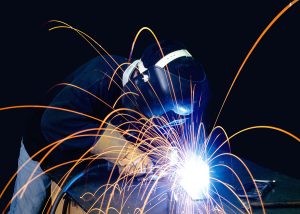
The Operational Demands Placed on Industrial Hoppers
Hoppers are pivotal in bulk handling systems. They store material, regulate discharge, and support downstream equipment. Any component failure will quickly disrupt production flow.
The stresses placed on hoppers are constant and varied. Heavy loads exert downward force on sidewalls and seams. Abrasive materials grind against interior surfaces during filling and discharge. Vibration from connected equipment and impact from falling material create additional strain.
If a hopper is poorly fabricated, these stresses expose weak points early in its service life. Cracking at weld seams, wall deformation, and premature wear often appear where material thickness or reinforcement falls short of operational needs. Inconsistent fabrication can also lead to misalignment with conveyors or feeders, increasing the chances of friction and material buildup.
Warping and cracking are not the only concerns. Clogging and erratic flow can occur when the hopper geometry does not match the material’s characteristics. These issues slow the entire process, increase the need for manual intervention, and raise safety risks for maintenance personnel.
Downtime tied to hopper failures often carries a high cost. Production delays, emergency repairs, and unplanned shutdowns strain both budgets and schedules. For plant managers, these disruptions highlight how closely fabrication quality is tied to operational stability.
Fabrication Practices That Support Reliable Hopper Performance
Heavy-duty hopper fabrication focuses on execution quality and adherence to application requirements. Each hopper is built to handle defined loads, material characteristics, and operating conditions specified by the customer.
Skilled welding techniques produce uniform joints that hold up under the vibration and repeated loading of industrial hoppers. Proper heat control and joint preparation reduce distortion and help maintain dimensional accuracy throughout fabrication.
One set of fabrication priorities that directly supports hopper performance includes:
- Adequate material thickness matched to load and abrasion levels
- Reinforcement that limits wall movement and stress concentration
- Consistent welds that resist cracking and deformation
These practices work together to produce hoppers capable of continuous operation with fewer interruptions.
Built to Keep Operations Moving
Material flow is influenced by how accurately hopper components are built and assembled. Interior surfaces, slopes, and outlets must align with material behavior defined by the application.
Smooth interior finishes reduce friction and help materials discharge consistently. Poorly executed welds or uneven seams inside the hopper can catch material and initiate buildup. Over time, these obstructions increase the risk of clogging.
Outlet construction also affects flow. A properly fabricated outlet supports steady discharge without bridging or rat-holing. Reinforcement around discharge points helps hoppers withstand localized stress at the point where material exits under load.
Vibration and impact resistance matter as well. When hopper walls flex or vibrate excessively, material flow becomes unpredictable. Skilled fabrication minimizes excess movement so material can discharge from the hopper as expected.
By fabricating hoppers to specifications, fabricators help align physical construction with real-world operating conditions. This alignment supports predictable throughput and reduces operator intervention.
Reducing Maintenance Through Fabrication Quality
Maintenance demands often reveal the long-term impact of how a hopper was fabricated. Material selection, weld quality, and dimensional accuracy directly influence how often a hopper requires attention once it is in service.
Hoppers fabricated with continuous, properly executed welds and reinforced stress areas are far more resistant to fatigue. Skilled workmanship reduces the likelihood of cracking at seams and load points, which are common sources of recurring welding repairs in poorly built units. Likewise, selecting thicker plate and wear-resistant materials during fabrication slows abrasion, extending the service life of liners and panels.
Precision fabrication also plays a key role in maintenance predictability. When hopper geometry is built accurately and consistently, material flows as intended. Reduced buildup means fewer unplanned cleanouts and more reliable maintenance intervals. Instead of reacting to flow issues caused by fabrication shortcuts, maintenance teams can plan service with confidence.
For customers, the result is measurable operational value. Thoughtful hopper fabrication keeps equipment online longer, reduces labor spent on corrective maintenance, and simplifies spare parts planning. Over the lifespan of the hopper, fabrication quality translates directly into lower maintenance costs and overall system reliability.
Custom Fabrication Aligned with Your Workflows
No two facilities move material the same way. Differences in material characteristics, throughput requirements, available space, and upstream and downstream equipment all demand fabrication that is purpose-built, not standardized.
At Swanton Welding, custom hopper fabrication is approached with long-term performance in mind. Future capacity, operating conditions, and system integration are considered early in the fabrication process, not treated as afterthoughts. That attention to detail is reinforced by in-house quality control at every stage of fabrication.
A Strategic Approach to Industrial Efficiency
Heavy-duty industrial hoppers play a quiet but powerful role in production efficiency. Their performance influences every aspect of your operations. Durable, custom-fabricated hoppers support your workflow and reduce downtime by withstanding the physical demands of industrial use. Investing in quality hopper fabrication is a strategic choice that protects production capacity and supports long-term cost control.
Every operation has its own challenges. If you’re looking for a heavy-duty hopper that’s built to handle yours, reach out to Swanton Welding. We’ll help you fabricate a solution you can rely on.

